 Loading... Please wait...
The Stockfish Story
Categories
Popular Brands
- Home
- The Stockfish Story
The Stockfish Story
The Story behind Stockfish
|
Norwegian Stockfish |
|
|
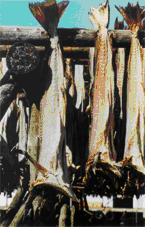
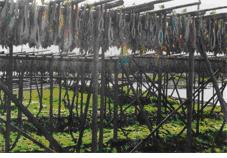
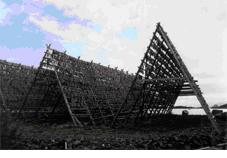
Norwegian Stockfish is world famous for its great quality and high grade. Good quality stockfish demands correct weather and temperature. In Lofoten these conditions occur at the same time as the winter cod arrives the spawning grounds. Traditionally the drying period in Lofoten is from early March to the middle of April. In other parts of Norway the periods may be a little later in the spring. The stockfish is hung on flat lofts or drying racks. Flat loft are more space demanding, while drying racks exploit the height. There is no documentation or research as to which method is better. |
|
|
|
|
Ties of small stockfish are hung on the thin end of the pole, the larger stockfish are hung on the thick end. The fish is hung well spaced to ensure airflow. it is also important that the fish does not come in contact with the other stockfish on the boards. This can cause hanging marks that can later lead to a reduction in quality. |
|
Flat lofts |
Drying racks |
|
|
Size & grading [Choose your Stockfish Size] |
|||
|
|
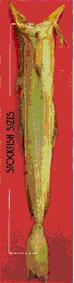
Size is a central criteria in stockfish sorting and grading, and is determined by length, weight and the number of fish per given weight, the so-called weight numer. The illustration shows the so-called stock-fish, which stretches from the center of the curve at the side cranium to the end near the tailfin area. Features of Prime Fish:
|
||
|
Prime fish is of the highest quality. There are variations in the different classes, but the norm is that the shall be free from blemishes and faults. The skin shall have an attractive appearance and the flesh shall exhibit a good colour.
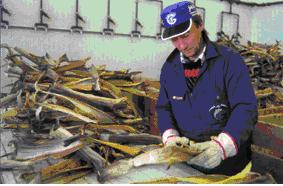
There is no other way of grading stockfish than by doing it manually. This is a trade which has been handed down through generations, and it takes a quick and knowing eye to distinguish one quality from the next. Sorting and grading is carried out in accordance with a branch standard. |
|||
All prices are in USD
Copyright 2026 Stockfish Express: Tastiest Best Stockfish in the World!.
Sitemap |
